
Ways to Prevent Stroke | Expert Tips for Stroke Prevention
Ways to Prevent Stroke: Evidence-Based Tips
A stroke hits you in seconds, before you can think about what’s happening to you. And it will change your life in a matter of minutes, before you think about why it has happened to you. But one this is for sure. The reasons for a stroke build up quietly over the years, through the choices you make in your everyday habits. With a well-monitored lifestyle and regular health checkups, you can mitigate the risk factors of a stroke.
Let’s walk through simple, evidence-based ways to reduce your risk of stroke. Shall we?
1. Keep your blood pressure in check
High blood pressure is the number one risk factor for a stroke, and there is a solid reason why high blood pressure is often termed ‘the silent killer’. When blood pressure remains high, it damages the blood vessels and increases the risk of a blood clot or a ruptured blood vessel.
The goal is to keep the blood pressure at a normal level, at 140/80 mmHg. If yours is higher, consult a doctor without delay and work on bringing it down through some lifestyle changes and medications.
Simple daily habits changes that can help you keep your blood pressure in a healthy range:
- Reduce salt intake and packaged food
- Move your body and stay active
- Manage your stress
2. Eat to protect your blood vessels
What’s on your plate has a significant role in stroke prevention. You may think ‘it’s just a pack of chips’ or ‘a bottle of juice’ and it hardly matters. But regular consumption of processed food, high sugar and unhealthy fat increases inflammation and promotes plaque buildup in the arteries.
Focus on adding more colours and variety to your plate. Enrich your diet with leafy greens, vegetables, fruits, nuts, seeds, whole grains, healthy fats like olive oil and fatty fish. Trust us, both your gut and heart thank you for these dietary changes.
3. Stay physically active
When we say physically active, it doesn’t necessarily have to be an intense workout. Moderate physical activities, like a 30-minute walk daily, swimming, cycling, or even dancing to your favourite songs, help improve blood circulation and lower blood pressure. The key here is consistency, not intensity. Pick any activity that naturally motivates you to get moving and stay moving.
4. Manage your weight
Overweight is one of the hidden contributors to stroke that is often overlooked. Excess body weight puts extra strain on the heart, which in turn increases blood pressure, diabetes, and high cholesterol, the major stroke risk factors.
There is a small catch here. If you get into the habit of eating clean and staying physically active, it naturally supports healthy weight management. It’s all interconnected.
5. Quit smoking and limit alcohol
If you have the habit of smoking and are looking for ‘how to prevent a stroke’, quitting is the only powerful thing you can do. It has been proven that smokers are twice as likely to have a stroke compared to non-smokers. Smoking damages blood vessels, increases blood pressure, thickens blood, and speeds up artery blockage.
But wait. Just as smoking harms the body in countless ways, quitting brings benefits in equally countless ways. When you quit smoking, your body starts healing. Within days, you can notice considerable changes in your body and thus steadily mitigate the risk of having a stroke.
6. Manage blood sugar level
Diabetes is another reason that significantly increases the risk of a stroke. Even borderline high blood sugar can damage blood vessels and raise concerns of a stroke.
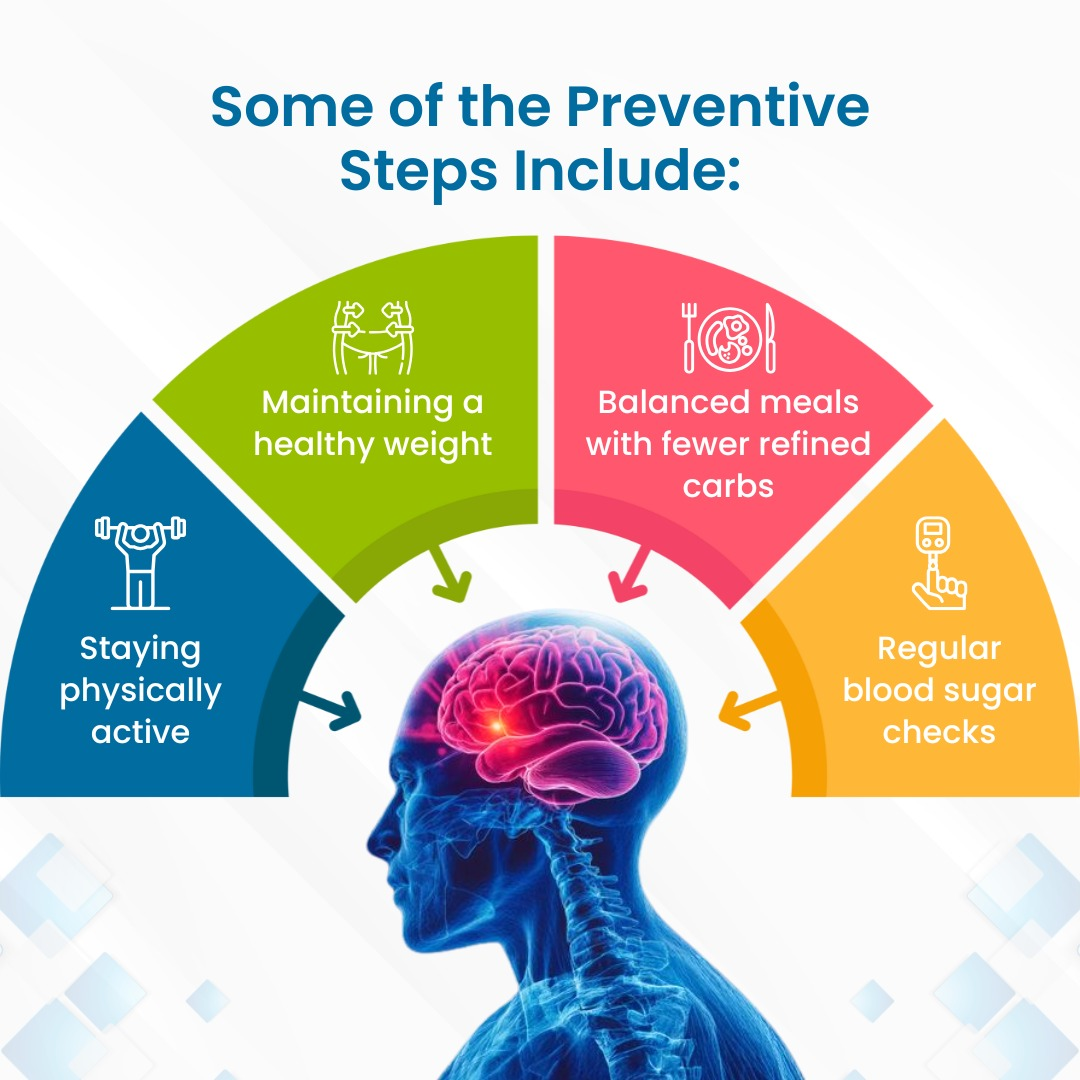
Some of the preventive steps include:
- Regular blood sugar checks
- Balanced meals with fewer refined carbs
- Staying physically active
- Maintaining a healthy weight
Again, doesn’t it look all interconnected? Our body is simple. It demands a few simple lifestyle changes to keep its functions normal.
7. Manage stress and sleep
Chronic stress and poor sleep both quietly contribute to high blood pressure and inflammation in the body. Needless to say, these are the common risk factors of a stroke.
Aim for 7-9 hours of quality sleep every day. Find healthy ways to manage your stress by being mindful, meditating, or doing deep breathing. Not to forget, limit screen time as much as possible. Just like your body, your brain needs rest to stay resilient.
Albert Einstein’s famous observation that “compounding is the eighth wonder of the world” holds true in the prevention of stroke, where small, consistent actions taken over time can compound into significant, life-changing benefits. Patience and consistency in following preventive steps allow healthy habits to develop and results in better daily living and overall well-being. This steady commitment not only enhances quality of life but also goes a long way in reducing the risk of stroke, proving that lasting change is often the result of simple actions repeated with purpose and perseverance.
FAQ
1. Can stroke really be prevented?
Yes. Research shows that up to 80% of strokes are preventable by managing risk factors such as high blood pressure, smoking, unhealthy diet, physical inactivity, and uncontrolled blood sugar. Small lifestyle changes, when practised consistently, can significantly reduce stroke risk.
2. What is the biggest risk factor for a stroke?
High blood pressure is the most important and common risk factor for stroke. It damages blood vessels over time and often shows no symptoms, which is why regular monitoring and early management are crucial.
3. How does excess weight increase the risk of having a stroke?
Excess weight raises the likelihood of high blood pressure, diabetes, and high cholesterol are the three major contributors to stroke. The encouraging part is that even modest weight loss can improve these risk factors and lower overall stroke risk.
4. Does family history mean a stroke is unavoidable?
No. While a family history of stroke may increase your risk, it does not mean a stroke is inevitable. Genetics play a role, but lifestyle factors such as diet, physical activity, blood pressure control, and avoiding smoking have a much stronger influence.
5. Can young adults be at risk of stroke?
Yes. Stroke is not limited to older adults. In recent years, cases among younger adults have been increasing, often linked to lifestyle factors such as smoking, obesity, stress, physical inactivity, and uncontrolled medical conditions.

Authored by Dr. Safal Sachidananda Shetty, an Interventional Neurologist & Stroke Expert in Bangalore with extensive clinical experience in stroke intervention, brain aneurysms, and complex neurovascular disorders. His mission is to educate, prevent, and provide advanced neurologic care using the latest medical innovations and minimally invasive procedures.