
Vertigo clinic near me When should you see a neurologist?

Vertigo clinic near me When should you see a neurologist?
As a neurologist, I hear this almost every other day. “Doctor, the room suddenly started spinning,” or “I feel like I’m losing balance while walking.” Many people ignore these symptoms at first. They assume it is because of tiredness, stress, low BP, lack of sleep, or weakness. Some patients arrive at my clinic after spending days searching online for answers, even typing phrases like ‘vertigo clinic near me’, hoping to understand why these spinning sensations keep happening.
The important thing to understand here is that not every dizziness is vertigo. When dizziness or spinning sensations start happening repeatedly, interfere with daily activities, or make you feel unsafe while standing or walking, it deserves proper medical attention.
So, let me walk you through what vertigo is, the causes for it and when you should see a specialist.
First, what exactly is vertigo?
I know, many people come across the term ‘vertigo’ for the very first time only after searching their symptoms online. Vertigo isn’t just feeling dizzy or lightheaded. It’s a very specific sensation, the feeling that you or your surroundings are spinning, tilting, or moving even when you’re perfectly still. To have a better understanding, let me phrase some of my patients’ statements here. “I feel the room is spinning around me”, “I feel pulled to one side”, “I lose balance while getting up”, “Everything suddenly starts moving for a few seconds”. Hope you got a better idea now.
Vertigo can happen due to problems in the inner ear ,brain and nervous system.
Common causes of vertigo
Several conditions can trigger vertigo. Some are temporary and manageable, while others need a detailed neurological evaluation.
- Inner ear problem
BPPV is by far the most common cause of vertigo I see, and thankfully, it’s also the most treatable. Conditions like BPPV (Benign Paroxysmal Positional Vertigo), vestibular neuritis, or ear infections can cause sudden spinning sensations. Episodes are usually brief, lasting just seconds to a minute, but they can be intense which occurs on change of posture or sudden movements of the head and such minor movements are enough to make you feel nauseous or unsteady. The vertigo disappears if head/ posture is maintained.
- Migraine-Related Vertigo
A lot of patients are surprised when I say that migraine can cause vertigo even without a headache. This is called vestibular migraine, and it’s one of the most underdiagnosed conditions I come across. The vertigo can last anywhere from a few minutes to several hours, and it often comes with light sensitivity, sound sensitivity, or a feeling of pressure in the head.
We can treat the underlying migraine with preventive medications and lifestyle changes, which dramatically reduce the frequency of attacks.
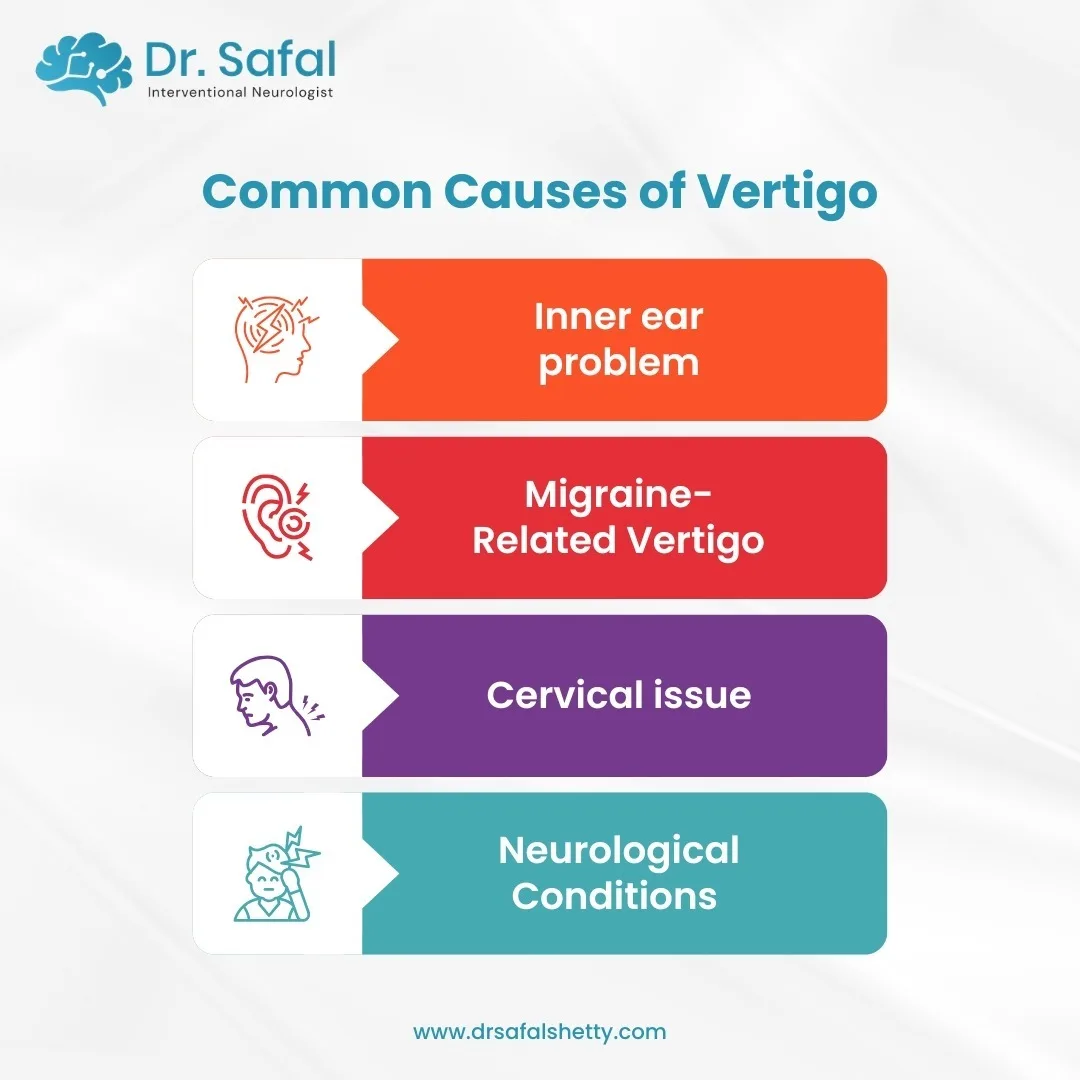
- Cervicogenic Vertigo
Your neck can actually play a role in dizziness. If you’ve been dealing with neck stiffness, cervical spondylosis, or years of hunching over a desk or phone, the joints and muscles in your cervical spine can send faulty signals to your brain about where your body is in space. This doesn’t cause true spinning vertigo the way inner-ear issues do, but it can produce a vague, unsettling sense of imbalance or a “head swimming” feeling that’s hard to describe.
So, it’s worth mentioning to your doctor, especially if your dizziness tends to worsen after sitting at a screen for long periods or when you turn your head a certain way.
- Neurological Conditions :
In certain situations, vertigo can be associated with neurological problems such as stroke, demyelination, tumours etc. affecting the brain, nerves, or coordination systems.
If the vertigo is recurrent or becomes severe, you should never ignore it; visit a vertigo clinic near you at the earliest.
When Should You See a Neurologist for Vertigo?
Not every episode of vertigo needs emergency care. But there are certain warning signs which are worth paying attention to, and when they begin appearing repeatedly, it may be time for you to search for a ‘vertigo clinic near me’ and get evaluated. Here are those.
- Frequent or Recurrent Episodes - If the spinning sensation keeps coming back again and again, it may indicate an underlying issue that requires proper diagnosis.
- Difficulty Walking or Loss of Balance - If you feel unstable while walking, tend to drift to one side, or fear falling down, it should be evaluated carefully.
- Vertigo Along with Headache - Vertigo associated with severe headache, migraine symptoms, or visual disturbances may point toward neurological causes.
- Numbness or Weakness - If vertigo is accompanied by numbness in hands or legs, facial weakness, speech difficulty, or confusion, immediate medical attention is necessary.
- Sudden Severe Vertigo - A sudden, intense spinning sensation with vomiting, inability to stand, or severe imbalance should not be ignored and could be first sign of stroke.
Bottom line
Vertigo is genuinely one of those conditions where a specialist’s eye makes a real difference. If your symptoms have been going on for more than two weeks, if previous treatments haven’t helped, or if you’re getting recurring episodes, visit a vertigo clinic near you and consult a neurologist.
FAQ
1. Can vertigo be treated?
Yes, in many cases, vertigo can be managed effectively once the underlying cause is identified. Treatment depends on the reason behind the vertigo and may include medications, rehabilitation exercises, lifestyle modifications or corresponding treatment for neurological conditions if present.
2. How is vertigo diagnosed?
Diagnosis usually begins with understanding your symptoms in detail. Based on symptoms, balance examinations and neurological assessments may be done. In some cases, imaging scans or additional tests may be advised.
3. What is the difference between dizziness and vertigo?
Dizziness is a general feeling of lightheadedness or imbalance, while vertigo specifically creates a spinning or moving sensation even when you are still.
4. What are the warning signs that vertigo needs immediate attention?
Vertigo associated with severe headache, weakness, numbness, difficulty speaking, double vision, or trouble walking should be evaluated immediately.
5. When should I search for a “vertigo clinic near me”?
If you experience repeated spinning sensations, balance problems, nausea, or dizziness affecting your daily life, it is important to seek medical evaluation.

Authored by Dr. Safal Sachidananda Shetty, an Interventional Neurologist & Stroke Expert in Bangalore with extensive clinical experience in stroke intervention, brain aneurysms, and complex neurovascular disorders. His mission is to educate, prevent, and provide advanced neurologic care using the latest medical innovations and minimally invasive procedures.