
Minimally Invasive Treatment for Brain Aneurysms
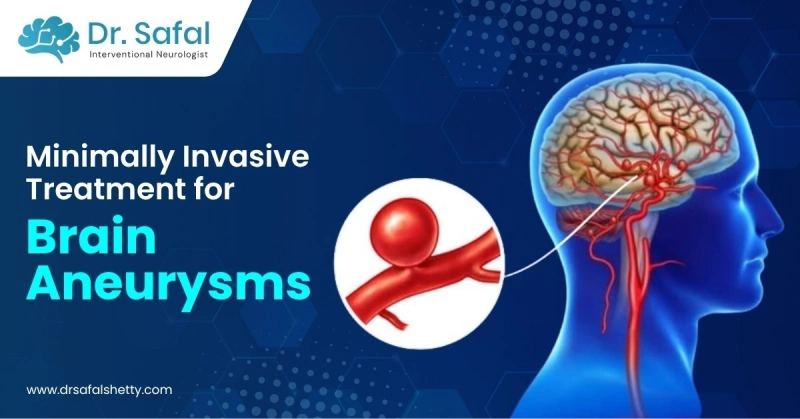
Minimally Invasive Treatment for Brain Aneurysms
Let me share a real-time scenario from our clinic. When I confront my patients about “brain aneurysm”, I see a wave of fear and confusion on their faces. I understand that for most patients, it’s a relatively new term.
Regarding brain aneurysm, the most frequently asked questions are “Is it dangerous?”, “Does it need surgery?” The answer is, we have come a long way in approaching brain aneurysms. The medical advancements have made it possible to treat many brain aneurysms without traditional open surgery. With minimally invasive treatment, many patients walk out of the hospital with only a small puncture wound in their wrist or groin.
Let me walk you through what it looks like and what it means in as simple language as possible.
What is a Brain Aneurysm?
Now, what is Minimally Invasive Treatment?
Common Minimally Invasive Techniques
1.Endovascular Coiling
This is one of the most widely used treatments. As I mentioned earlier, a thin, flexible tube called a catheter is inserted through a blood vessel, usually in the groin or wrist, and is carefully guided up to the brain blood vessel.
Once it reaches the aneurysm, tiny platinum coils are released into the bulge. These coils promote clotting, and over time, the body forms a clot around the coils, which reduces the risk of rupture.
It’s a precise procedure and works well for many types of aneurysms.
2. Flow diverter stents
In some cases, especially with larger or more complex aneurysms, we use a device called a flow diverter. This is a small mesh-like stent placed across the neck of the aneurysm.
Instead of filling the aneurysm directly, this device redirects blood flow away from it. As a result, the aneurysm gradually shrinks and heals as the blood vessel rebuilds itself.
This method is particularly useful for aneurysms that are difficult to treat with coils alone.
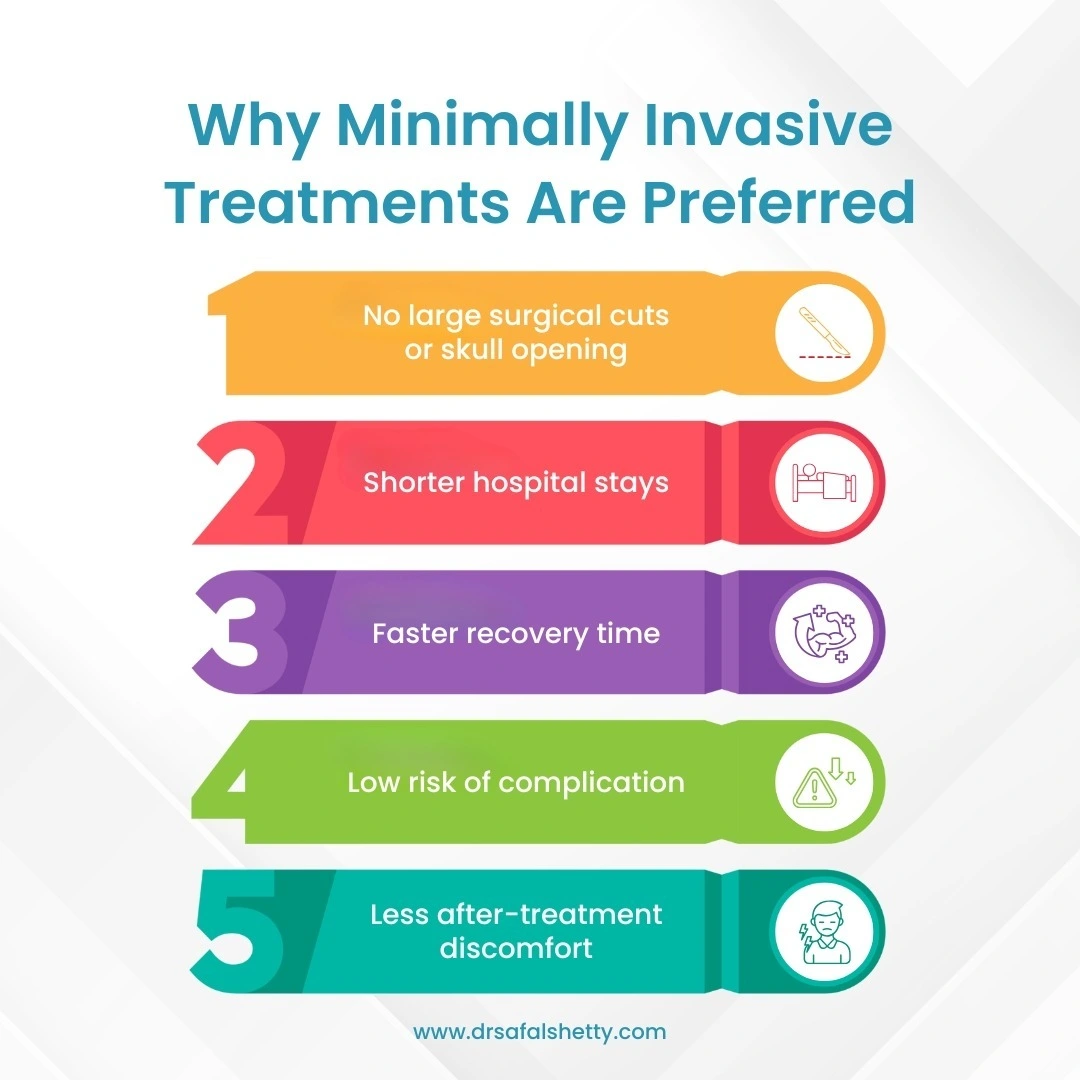
Why Minimally Invasive Treatments Are Preferred
When I talk more about this minimally invasive treatment, I often witness a pleasant surprise on my patients’ faces. This technique offers several important advantages, and let me share them with you all here.
- No large surgical cuts or skull opening
- Shorter hospital stays
- Faster recovery time
- Low risk of complication
- Less after-treatment discomfort
What to expect during the process
After the procedure, patients are monitored closely in an intensive care setting for a short period. Most people can go home within a few days if everything is stable.
Recovery and follow-ups
- Regular imaging scans to monitor the treated aneurysm
- Medications, if required (especially after stent placement)
- Lifestyle changes like controlling blood pressure and avoiding smoking
As your doctor, I always emphasise that treatment is just one part of the journey, long-term care matters just as much.
Bottom line

Authored by Dr. Safal Sachidananda Shetty, an Interventional Neurologist & Stroke Expert in Bangalore with extensive clinical experience in stroke intervention, brain aneurysms, and complex neurovascular disorders. His mission is to educate, prevent, and provide advanced neurologic care using the latest medical innovations and minimally invasive procedures.