
Stroke in Young Adults: Causes, Symptoms, Risk Factors and Prevention
Stroke in Young Adults: Causes, Symptoms, Risk Factors and Prevention
A few years ago, stroke was widely perceived as a health concern that only affected older adults. But not anymore. In fact, these days, age doesn’t make anyone immune to any health conditions. Stroke is no exception to that.
A stroke can occur at any age, including during the 20s, 30s or 40s. Even though we can not pin point the exact reason to the increasing number of strokes, rising blood pressure, sedentary lifestyles, stress, and unhealthy eating habits are some of the primary reasons that are pushing stroke risk into a much younger age group.
So, if you are in your 20’s or 30’s, it is worth a few minutes to understand what’s really going on with respect to stroke in young adults. Because, catching the warning signs early make a significant difference between a full recovery and permanent disability.
What Exactly Is a Stroke?
A stroke happens when blood supply to part of your brain is suddenly interupted or reduced. Without sufficient oxygen and nutrients, brain cells straves of oxygen and within minutes those cells start getting damaged or die. That is why, in case of a stroke, every minute of delay can increase the risk of long-lasting damage.
There are two major types of strokes:
- 1. Ischemic stroke: caused by a blocked blood vessel.
- 2. Hemorrhagic stroke: caused by a blood vessel bursting and bleeding in and around the brain.
Causes of Stroke in Young Adults
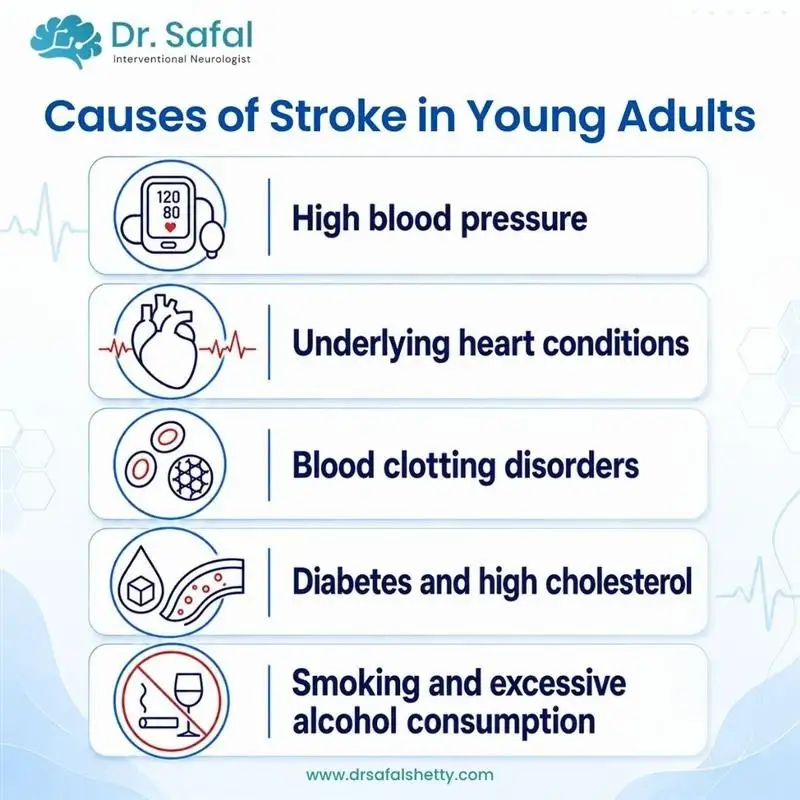
Several conditions and circumstances can contribute to stroke at a younger age. Some of the common causes include:
- 1. High blood pressure::High blood pressure is one of the most important risk factors of a stroke. Especially in young adults, hypertension often gets undiagnosed as they assume they are too young to have it. Since hypertension causes no noticeable symptoms, many young adults possess this condition without knowing it.
- 2. Underlying heart conditions: Certain heart conditions, such as irregular heart rhythms and structural abnormalities like a hole in the heart, can allow blood clots to form and travel to the brain.
- 3. Blood clotting disorders: Some inherited or acquired conditions can increase the tendency of blood to clot. This can potentially block blood flow to the brain.
- 4. Diabetes and high cholesterol: These are common issues found in young adults due to poor diet and inactivity. Eventually, these conditions damage the blood vessels and increase the likelihood of stroke.
- 5. Smoking and excessive alcohol consumption: Excessive alcohol consumption can trigger sudden spikes in blood pressure, and tobacco damages the blood vessels. Both of these contribute to stroke risk factors.
Stroke symptoms you should never ignore
The symptoms of stroke are generally similar regardless of age. Stroke symptoms come on suddenly, and recognising them fast genuinely saves lives. Since stroke may not be expected in a young person, symptoms can sometimes be mistaken for fatigue, migraine, dizziness or other conditions. Common warning signs include:
- Sudden weakness or numbness, particularly on one side of the body
- Facial drooping
- Difficulty speaking or understanding speech
- Sudden vision changes
- Sudden dizziness, loss of balance or difficulty walking
- Severe, sudden headache, particularly with no known cause
How Can Young Adults Prevent Stroke?
Stroke prevention starts with understanding your risk factors and making healthy choices early in life. Practical steps include:
- Monitor blood pressure: Regular checks can help identify hypertension before it causes complications.
- Eat a balanced diet: Choose more fruits, vegetables, whole grains and high-fibre foods while limiting excessive salt, saturated fats and processed foods.
- Stay physically active:Regular exercise can help maintain a healthy weight and support healthy blood pressure and cholesterol levels.
- Avoid smoking: Quitting tobacco can significantly reduce damage to blood vessels and lower stroke risk.
- Limit alcohol: Excessive alcohol consumption can increase blood pressure and contribute to stroke risk.
- Manage existing conditions: If you have diabetes, high cholesterol, hypertension or heart disease, follow your healthcare provider's treatment recommendations and attend regular check-ups.
Bottom line
Stroke in young adults is no longer a rare exception, it’s a growing reality shaped by modern lifestyles. Recognising the warning signs, understanding personal risk factors and addressing preventable causes can help reduce the risk. Most importantly, sudden neurological symptoms should never be dismissed simply because someone is young. When stroke symptoms appear, every minute matters. Seek emergency medical care immediately.

Authored by Dr. Safal Sachidananda Shetty, an Interventional Neurologist & Stroke Expert in Bangalore with extensive clinical experience in stroke intervention, brain aneurysms, and complex neurovascular disorders. His mission is to educate, prevent, and provide advanced neurologic care using the latest medical innovations and minimally invasive procedures.