
Stenting and Angioplasty in the Brain
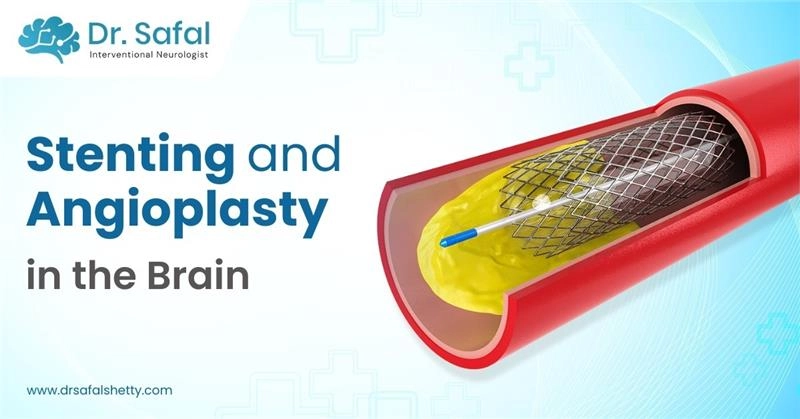
Stenting and Angioplasty in the Brain
We talk about blocked arteries in the heart. But we rarely know about or talk about similar blockages in the arteries supplying your brain. These blockages can significantly increase the risk of stroke, one of the leading causes of disability and death worldwide.
Traditionally, this condition is managed with medications. But in recent years, a promising option like minimally invasive techniques, such as angioplasty and stenting, has offered a new dimension in stroke prevention and management.
I know these words, “Angioplasty” and “Stenting,” sound intimidating. But sit with me for a moment to have a pretty solid understanding of what these procedures are and why we do them.
What Happens When Brain Arteries Narrow?
What Is Angioplasty in the Brain?
- A thin tube called a catheter is inserted, usually through an artery in the groin or wrist.
- This catheter is carefully guided up to the blood vessels in the brain.
- A tiny balloon at the tip is inflated at the site of narrowing.
- This gently pushes the walls of the artery outward and widens the passage to make the blood flow freely again.
What Is a Stent and Why Is It Used?
When do we doctors recommend brain-stenting?
It’s important to understand that stenting in the brain is not for everyone. We always weigh the risks carefully before recommending it to any patient. After carefully evaluating the patient’s scanning report, medical history, and overall health, we typically consider these patients for brain stenting.
- Patients who have severe narrowing of the brain arteries (usually more than 70%)
- Those who continue to have symptoms despite optimal medical therapy
- Who are at high risk of stroke due to reduced blood flow
- Those who cannot tolerate or respond well to medications alone.

What are the benefits of brain stenting?
For the right patient, angioplasty and stenting can be genuinely life-changing. The procedure improves blood flow to the brain and significantly reduces the risk of recurrent strokes. The best part is that all these are done through a minimally invasive approach that requires no open surgery. Recovery is relatively quick, and most patients are back to their normal routine sooner than they would expect.
What happens after brain-stenting?
Bottom line
As doctors, we always choose the safest and most effective treatment for each individual.

Authored by Dr. Safal Sachidananda Shetty, an Interventional Neurologist & Stroke Expert in Bangalore with extensive clinical experience in stroke intervention, brain aneurysms, and complex neurovascular disorders. His mission is to educate, prevent, and provide advanced neurologic care using the latest medical innovations and minimally invasive procedures.