
Causes of Loss of Consciousness: Symptoms, Diagnosis and Treatment
Causes of Loss of Consciousness: Symptoms, Diagnosis and Treatment
You are in the middle of a busy day at the office. While rushing to the meeting hall, you suddenly faint. The obvious first reaction from your colleagues would be, “Did you skip breakfast today?” or, in another scenario, you stand up too fast after a long call, the room tilts, and you’re on the floor before you know it. You realise all this only when someone splashes water on your face.
Some assumptions and reactions around loss of consciousness often relate to everyday factors such as hunger, stress, fatigue, or dehydration. Sometimes, these attribute to loss of consciousness, but other times, the sudden blackout might be your body’s way of flagging a certain underlying neurological, cardiovascular, or metabolic condition that requires medical attention.
Here is a rundown on what really causes loss of consciousness, associated symptoms, appropriate diagnostic approach and what the treatment looks like.
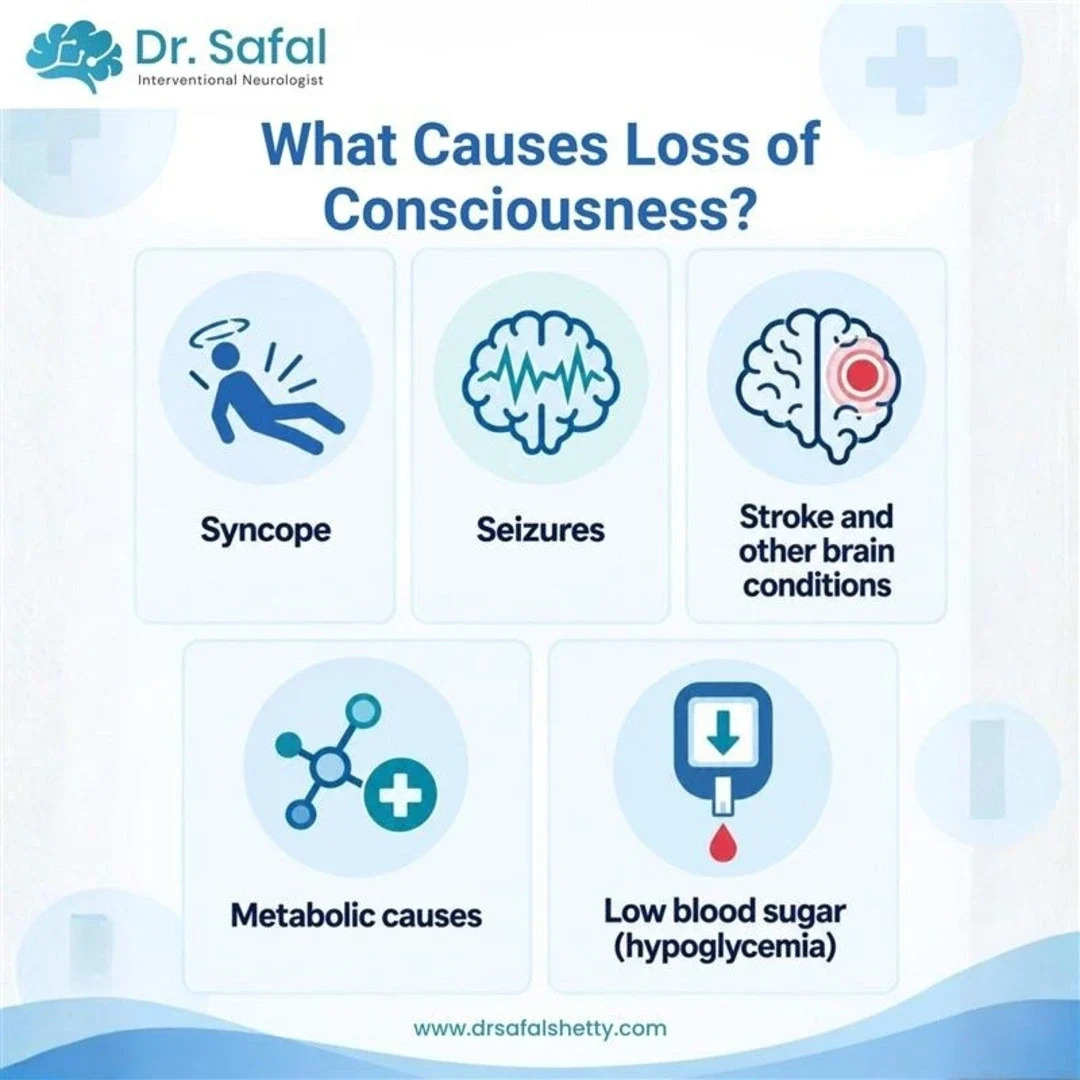
What Causes Loss of Consciousness?
Losing consciousness means your brain briefly stops registering awareness, you don’t respond, you don’t remember, and you may collapse. This occurs when the brain temporarily does not receive adequate blood flow, oxygen, or normal electrical activity. This episode can last a few seconds or several minutes. Here are some of the common causes we, neurologists, look into.
1. Syncope
This is one of the most frequent causes of transient loss of consciousness, especially in younger people. Common triggers for syncope are standing for too long, dehydration, emotional stress, pain, heat, or a sudden drop in blood pressure. These factors overactivate the vagus nerve and cause heart rate and blood pressure to drop suddenly. This results in a dip in the blood flow to the brain and causes loss of consciousness.
2. Seizures
Unlike fainting, a seizure can cause sudden loss of awareness and consciousness due to abnormal electrical activity in the brain. A generalised seizure may come with jerking movements, tongue biting, confusion afterwards, loss of bladder control, or confusion after the episode. However, sometimes seizures are also associated with brief periods of unresponsiveness. In such cases, a proper neurological evaluation is important to determine the cause of the seizure.
3. Stroke and other brain conditions
Loss of consciousness is not a typical symptom of a stroke. However, severe strokes, brain haemorrhage, increased pressure inside the skull, or conditions affecting the brainstem can impair consciousness. This is a medical emergency and requires immediate attention.
4. Metabolic causes
Low blood sugar, abnormal sodium levels, severe dehydration, lack of oxygen, and certain organ-related problems can affect brain function and lead to unconsciousness. Certain medications can also lower blood pressure or affect brain function enough to trigger a blackout.
5. Low blood sugar (hypoglycemia)
This is common in people with diabetes, especially on insulin or certain medications. A sudden sugar crash can cause dizziness, confusion, and blackouts.
The symptoms surrounding an episode can provide important clues about its cause. Depending on the underlying condition, a person may experience:
The symptoms surrounding an episode can provide important clues about its cause. Depending on the underlying condition, a person may experience:
- Sudden unresponsiveness
- Dizziness or light-headedness
- Blurred or tunnel vision
- Sweating or nausea
- Abnormal body movements or jerking
- Tongue biting
- Confusion or disorientation after regaining consciousness
- Headache
- Weakness or difficulty speaking
- Memory loss surrounding the event
The duration of unconsciousness and the symptoms before and after the episode are particularly important during medical evaluation.
How Doctors Diagnose the Cause
A neurologist typically starts with a detailed examination of the history, such as what you were doing, how it felt, and what witnesses observed. We ask questions like previous episodes of loss of consciousness, any use of medication or substances, any history of head injury, existing neurological or cardiovascular conditions and also family history of seizures or sudden unexplained death. This helps us to make an informed decision.
Depending on the suspected cause, we may then recommend blood tests, blood pressure monitoring, electrocardiogram (ECG), brain imaging such as CT or MRI, or an electroencephalogram (EEG) to assess brain electrical activity.
Treatment for Loss of Consciousness
Treatment depends entirely on the underlying cause rather than the loss of consciousness itself.
For example, dehydration or low blood sugar may require correction of the underlying imbalance. People with recurrent syncope may need lifestyle modifications or treatment for the cardiovascular or blood pressure-related cause.
When seizures are diagnosed, a neurologist may recommend anti-seizure medication and other measures to reduce the risk of future episodes. If a structural brain problem, infection, bleeding, or another neurological condition is identified, treatment will be directed at that specific condition.
When to See a Doctor
If you or someone you know has ever blacked out, even once, it’s worth getting checked, especially if it happened without warning, during exercise, or came with chest pain, confusion, or slurred speech afterwards. A neurologist can help pinpoint the cause and rule out anything serious.
Bottom line
Loss of consciousness can have several causes, ranging from relatively common fainting episodes to seizures and serious neurological conditions. Identifying what happened before, during, and after the episode is essential for reaching an accurate diagnosis.
A neurologist can assess the symptoms, determine whether neurological testing is required, and guide treatment based on the underlying cause. Anyone experiencing unexplained or recurrent loss of consciousness should seek appropriate medical evaluation rather than assuming that the episode is harmless.

Authored by Dr. Safal Sachidananda Shetty, an Interventional Neurologist & Stroke Expert in Bangalore with extensive clinical experience in stroke intervention, brain aneurysms, and complex neurovascular disorders. His mission is to educate, prevent, and provide advanced neurologic care using the latest medical innovations and minimally invasive procedures.