Carotid Stenting: How Is It Done? Procedure, Benefits and Recovery
Carotid Stenting: How Is It Done? Procedure, Benefits and Recovery
Stroke prevention is usually concerned with hypertension, diabetes mellitus, hyperlipidemia and lifestyle factors. However, there are other factors which may be overlooked, such as the condition of a person’s carotid artery.
The carotid artery is a major blood vessel that carries oxygenated blood from the heart to the brain. Fatty deposits, also known as plaques, accumulate within these arteries and may cause them to become constricted and reduce blood flow to the brain. This condition is known as carotid artery stenosis and can increase the risk of a stroke.
For some people, we recommend carotid stents to widen a blocked vessel for better circulation of blood through it. If you are wondering what this means, let me use this space to describe how this process works, why it might be suggested for selected patients and what kind of recovery is expected from it.
What is carotid stenting?
Carotid stenting is a minimally invasive procedure used to treat significant narrowing in a carotid artery.
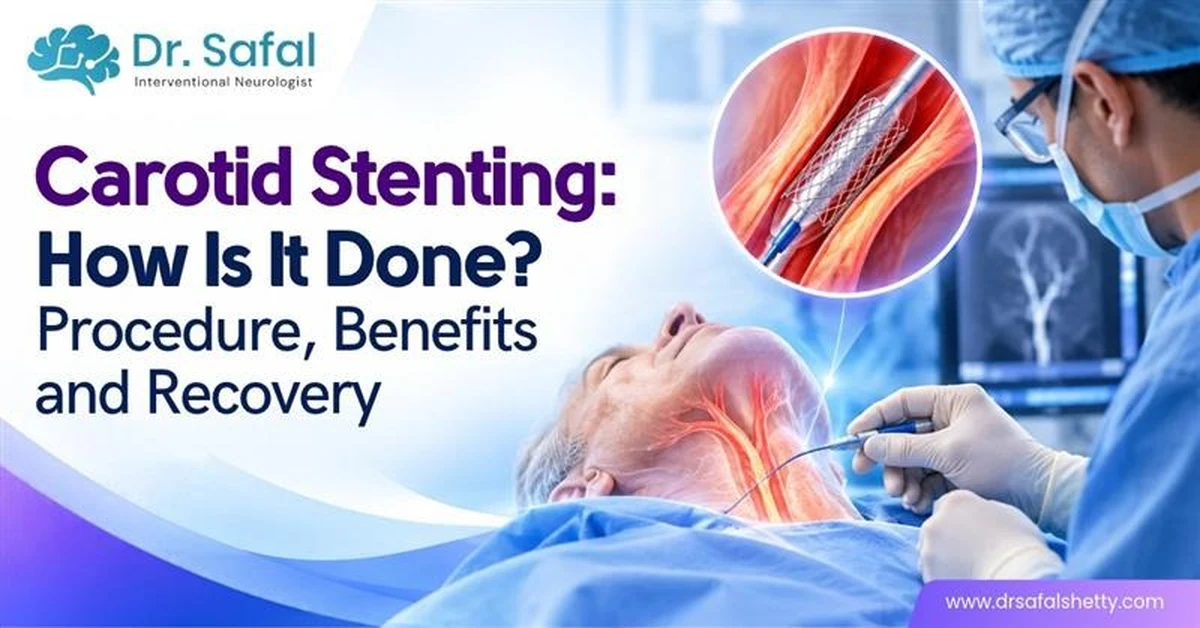
During the surgery, a catheter is inserted into an artery near your groin or wrist to reach the narrowed carotid artery. A small balloon is used to widen the narrowed area before placing a stent.
A stent is an internal mesh-like device which stays within arteries to keep them open. This allows better circulation of blood toward the brain.
Carotid stents are not always suggested to all patients who have a narrowed carotid artery. Decision-making is based on various aspects such as the extent to which it is narrowed, symptoms, the general condition of patients’ health and their risk factors.
Why is carotid stenting needed?
Carotid artery stenosis can lead to a high chance of having an ischemic stroke. The plaque within an artery may detach itself from there and be responsible for forming or contributing towards formation of a blood clot. A clot may move to the brain, where it could obstruct an artery there.
Depending on the circumstances, we physicians might suggest medications and lifestyle modifications separately. For patients who have severe stenosis or some signs of stroke, a procedure may be considered to reduce the risk of future stroke.
Carotid stenting is especially beneficial for certain individuals who might be at greater risk of complications due to conventional open surgery called carotid endarterectomy. The choice between the two procedures is made after carefully evaluating the individual patient.
How is carotid stenting performed?
Before operating, we do imaging tests like carotid ultrasound, CT angiography or MR angiography to understand the position and extent of stenosis.
During surgery, the patient is given local anaesthesia. We then begin the process by making a tiny incision on an artery, usually in the groin area or wrist. The catheter is then gently taken up closer to the stenosed( narrowed) carotid artery under visual guidance of X-rays. We take all the precautions to prevent plaque from travelling toward the brain while undergoing stenting.
A narrowed area can be widened by inflating it with a small balloon. Then the stent is placed over a narrowed section of an artery to support the expansion of the artery.
Once the stent is securely placed, the catheter is removed, and the access site is closed. Generally, the entire procedure is about an hour long but may differ from patient to patient according to their condition.
What are the benefits of carotid stenting?
The main goal of carotid stents is to improve blood circulation by opening up a blocked carotid artery and reduce the risk of stroke in appropriately selected patients.
Some potential benefits include
- Minimally invasive compared to an operation, by means of a endovascular approach under fluoroscopy.
- Usually, it needs just an insignificant hole instead of a big one.
- The recovery process is quite fast.
- It could be an option for those who aren’t good candidates for carotid endarterectomy.
- It can effectively restore the opening of a significantly narrowed artery.
However, it remains a medical procedure that has its own set of complications such as strokes, haemorrhage, infections, vascular damage and sometimes recurrent stenosis. The Interventional Neurologist would talk about them with you before surgery.
What can you expect during recovery?
Following a carotid stent procedure, patients are kept under close observation for some time due to possible neurologic signs such as headaches, dizziness, or changes in blood pressure.
Patients may be discharged from the hospital within 48 hours of stenting if they have good health status and recovery post-stenting. The Interventional Neurologist will provide information about physical activity and care of the catheter insertion site.
We may also prescribe antiplatelet drugs to prevent clot formation on a stent. Do not stop taking them by yourself.
The recovery process doesn’t stop after leaving the hospital. Blood pressure control, cholesterol management and diabetes prevention through healthy food intake and regular exercise, as recommended by a physician, are good ways to protect arteries years later on.
The bottom line
Carotid stenting is a well-established procedure to treat severe stenosis in some cases. It can help restore blood flow and reduce stroke risk when used in the right circumstances.
If you have been diagnosed with carotid artery stenosis, don’t assume that a stent is automatically necessary. The right treatment depends on your symptoms, imaging findings, degree of narrowing, medical history and overall stroke risk. An Interventional neurologist can help you understand these factors and decide whether medication, monitoring, carotid stenting or another treatment approach is appropriate for you.
