
Common Neurological Symptoms and Their Causes in Daily Practice

Common Neurological Symptoms and Their Causes in Daily Practice
We’ve all had this moment. Out of nowhere, we experience a sudden headache, a tingling sensation in the hand, or a brief spell of dizziness. And most of the time, we tell ourselves “probably it’s nothing, or because of stress”, and move on with our daily activities. And often, sometimes it’s true. But other times, these everyday symptoms can be your body’s way of signalling something deeper. Especially when it comes to nervous system health, these are among the most significant signs.
Let’s walk through some of the most frequently seen neurological symptoms in daily practice and what they might mean.
1. Headache
This is among the most common concerns patients bring up in my clinic, almost every day. But not all of these complaints have a neurological cause. Many are caused by stress, lack of sleep, dehydration, or staring at a screen for too long. We can distinguish some of them. Like, if you feel a tight band is tied around your head, it might be because of stress. If you have a more intense headache along with nausea, sensitivity to light, or even visual disturbances, it can be diagnosed as migraine.Several causes of headache in daily life can impact work performance.
2. Dizziness and Vertigo
This is another symptom most people experience but struggle to describe in my clinic. Dizziness and vertigo may feel similar, but they are separate symptoms with different underlying causes.
Dizziness: a lightheaded, about-to-faint feeling. Common causes for this include low blood pressure, dehydration, standing up for too long, or anxiety.
Vertigo: a kind of spinning sensation in the head. Usually, this comes from the inner ear, but it is often confused with the brain.
These are some common complaints my patients bring up to my clinic, and in many cases, they can be managed with effective treatment.
But when this dizziness or vertigo is accompanied by sudden weakness, slurred speech, or double vision, then that combination might point towards the brain and urge for immediate attention.
3. Numbness, tingling and burning
This is one familiar feeling most of us have experienced after sitting or sleeping in an awkward position.
But if the numbness and tingling are persistent, last longer, or affect one side of the body, then it may indicate a nerve-related issue. Some of the possible causes include nerve compression (like carpal tunnel syndrome), diabetic nerve damage or vitamin deficiencies.
Sudden numbness on one side of the body is more concerning and could indicate a problem in the brain itself, like a stroke. And it should be worth discussing with a neurologist.
4. Memory problem
We all forget things occasionally, like where we kept our keys or why we walked into a room. That’s normal.
But when memory issues start interfering with daily life, it may need attention. Forgetting the entire conversation that happened recently, repeatedly asking the same question, getting lost in the familiar neighbourhood, or struggling to find the right words can be the early warning signs of a neurological condition.
Ageing also plays an important role in this memory loss problem. Other factors like stress, poor sleep, depression, thyroid disease or even vitamin deficiencies can also affect memory. In some cases, it may point toward conditions like dementia.
5. Tremors and Unusual Movements
Have you ever noticed your hands shaking slightly when holding a cup or writing? Mild tremors can happen due to an overactive thyroid, anxiety, too much caffeine, fatigue, or certain medications.
However, when the hand is relaxed and doing nothing, and you observe persistent tremors or involuntary movements, this may indicate an underlying neurological condition.
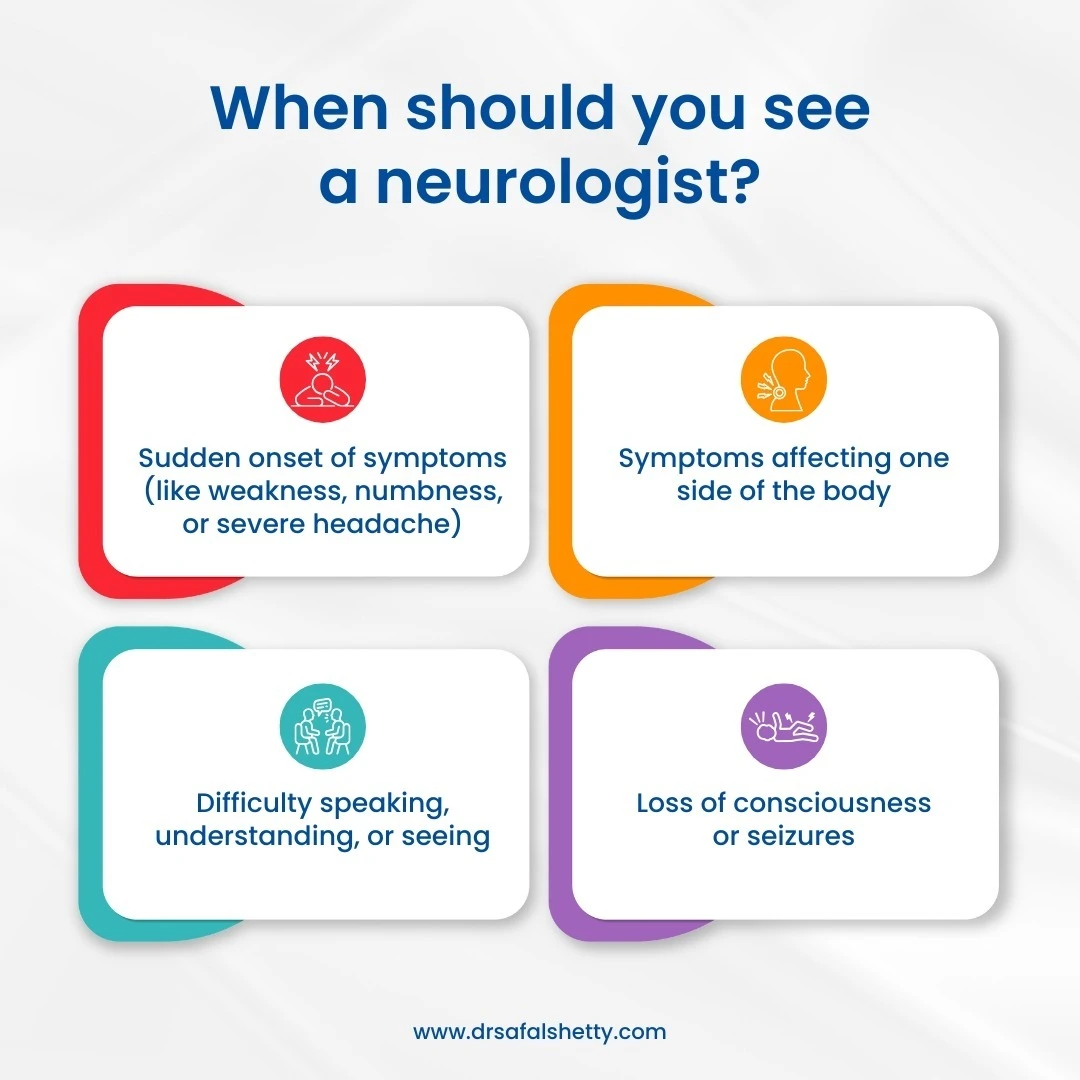
When should you see a neurologist?
- Sudden onset of symptoms (like weakness, numbness, or severe headache)
- Symptoms affecting one side of the body
- Difficulty speaking, understanding, or seeing
- Loss of consciousness or seizures
These could indicate medical emergencies and require urgent care.
Bottom line

Authored by Dr. Safal Sachidananda Shetty, an Interventional Neurologist & Stroke Expert in Bangalore with extensive clinical experience in stroke intervention, brain aneurysms, and complex neurovascular disorders. His mission is to educate, prevent, and provide advanced neurologic care using the latest medical innovations and minimally invasive procedures.